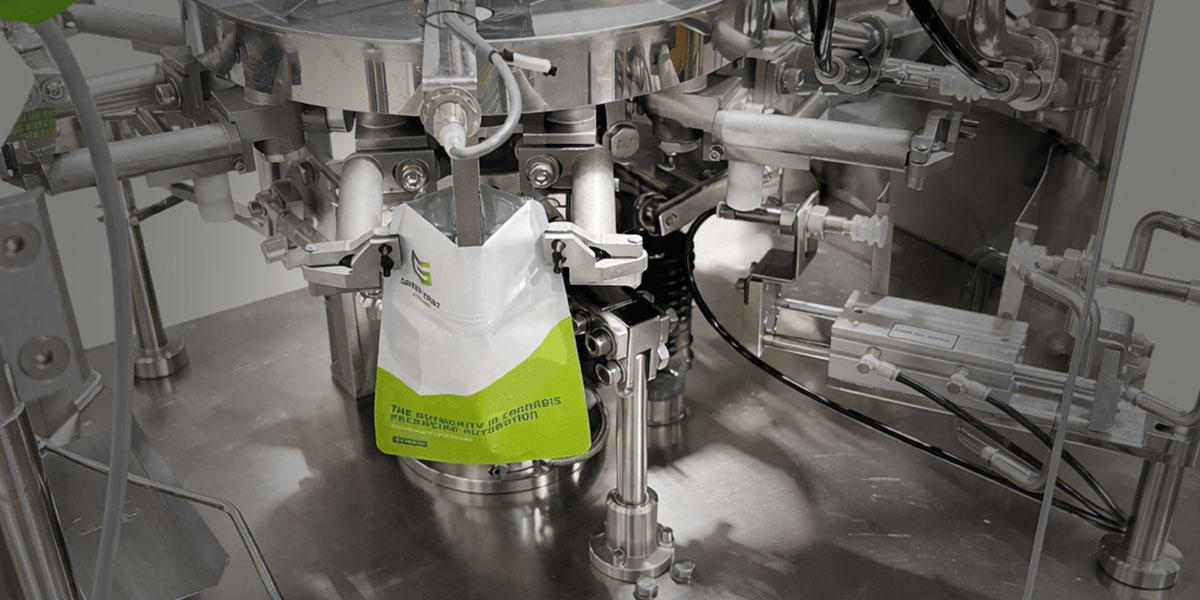
Next-Level Automated Bagger
The Problem with Traditional Bagging Systems
In cannabis production, packaging is where margins are either protected or destroyed.
Most operators don’t realize how much money is quietly lost in packaging inefficiencies:
- Slow changeovers
- Labor-heavy workflows
- Overpaying for packaging formats that don’t match product value
And increasingly, one shift is becoming clear:
High-performing operators are moving more volume into bags while upgrading the automation behind them.
At the center of that shift is a new class of equipment: servo-driven cannabis bagging automation.
Most bagging machines on the market today are built on mechanical, cam-driven systems.
They were never designed for cannabis.
They were designed for:
- Long runs
- Single SKUs
- Minimal changeover
That’s not how cannabis works.
In a real facility, you’re constantly switching:
- Bag sizes
- Weights
- Strains
- SKUs
And with traditional systems, every one of those changes costs you time.
Operators are forced to:
- Manually adjust components
- Recalibrate positions
- Troubleshoot alignment issues
The result: lost production time, higher labor costs, and inconsistent output.
Why Servo-Driven Bagging Changes Everything
Servo-driven systems replace mechanical guesswork with digital precision.
Instead of manually adjusting the machine, operators simply:
- Select settings on a touchscreen
- Load saved configurations
- Run
Every station is controlled independently by servo motors, meaning:
- Movements are precise
- Adjustments are programmable
- Performance is consistent
What that actually means on the floor:
- Changeovers drop from hours to minutes
- Operators don’t need deep mechanical expertise
- The machine runs smoother with fewer interruptions
In cannabis, where SKU variability is constant, this is a requirement.
Express Bagging Labor Analysis
How Much Labor Waste Is Hiding in Your Bagging Process?
Estimate your lost time and labor in under 30 seconds.
Based on typical cannabis production workflows. Adjust values to match your facility.
Bagging vs. Jarring: The Economics Most Operators Miss
There’s still a common mistake happening across the industry:
Operators are putting lower-grade flower into premium, high-cost packaging and crushing their margins in the process.
Let’s break it down.
Jars:
- Higher material cost
- Slower to process
- Bulkier to ship and store
- Better suited for premium SKUs
Bags:
- Lower cost per unit
- Faster packaging speeds
- Easier logistics
- Better suited for high-volume product
The takeaway: Not all flower deserves premium packaging.
A Smarter Packaging Strategy
The most efficient operators are aligning packaging with product value:
- A Bud / Premium Flower = Jars
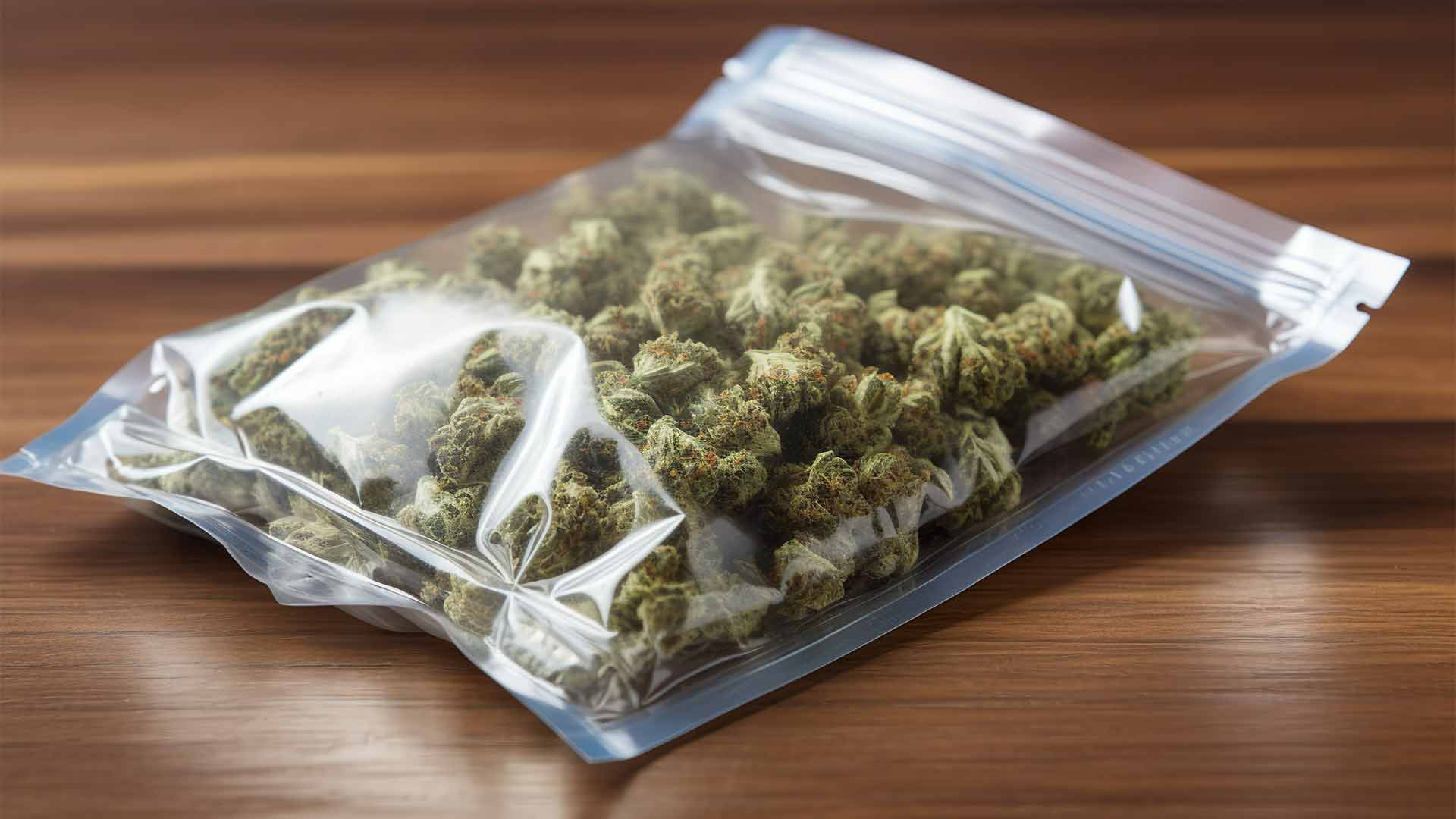
- B/C Bud / High-Volume SKUs = Bags
This does two things:
- Protects brand presentation where it matters
- Maximizes margin where volume drives revenue
When you mismatch packaging to product, you’re effectively overpaying on every unit.
Where the Precision Bagger Fits in the Market
Right now, the bagging market is fragmented:
- Entry-level linear systems = lower cost, limited speed
- Large industrial machines = high cost, overbuilt for cannabis
- Traditional rotary systems = mechanical, difficult to operate
What’s been missing is a system that hits the middle:
High performance, flexible, and built for cannabis workflows
That’s where servo-driven rotary baggers like the Compact Rotaty Bagger fit.
- Faster than linear systems
- More flexible than traditional rotary machines
- More cost-effective than large industrial solutions
It’s the operational sweet spot for cannabis producers scaling throughput.
Integration: From Bulk to Bag in One System
The real advantage is how the Compact Rotary Bagger fits into a complete system.
With Green Vault Systems, packaging becomes a continuous flow:
Bulk Flower → Precision Batcher → Infeed → Bagger → Finished Product
And with the P-Flex Quick Swap system, operators can:
Switch from jarring to bagging in minutes.
That means:
- One production line
- Multiple packaging formats
- No major downtime
This flexibility is critical as product mix shifts throughout the day or even within the same run.
The Financial Case
At the end of the day, this comes down to numbers.
1. Labor Reduction
Example (modeled):
- 2 operators replaced
- $18/hour average wage
- 2 shifts/day
👉 ~$75,000+ annual labor savings
2. Increased Throughput
Faster packaging = more units per shift
- More sellable product
- Better utilization of upstream systems
- Reduced backlog
3. Changeover Efficiency
Servo-driven systems eliminate time lost to adjustments.
If you save:
- 1 hour/day in changeovers
That’s:
- 250+ hours/year of recovered production time
4. Packaging Cost Optimization
By shifting volume into bags:
- Lower material costs
- Reduced shipping expenses
- Improved margin per unit
Total Impact
When combined, these gains create a compounding effect:
- Lower cost per unit
- Higher output per shift
- Reduced labor dependency
- Faster payback period
In most cases, automation like this pays for itself in months, not years.
The Bigger Shift Happening
Cannabis is maturing.
Operators are no longer just asking:
“How do we package this?”
They’re asking:
“How do we package this profitably, at scale?”
And the answer increasingly looks like:
- Smarter packaging format decisions
- Flexible production systems
- Automation that matches real-world workflows
Final Thoughts
If you’re still running manual bagging, or relying on outdated mechanical systems, you’re not just losing efficiency.
You’re leaving margin on the table every single day.
Contact Us to Get Started
Want to see how cannabis bagging automation fits into your operation?
- Get a custom ROI breakdown
- Compare bagging vs jarring for your product mix
- Explore full system integration
Click the Contact Us link below to get started.